I've seen a lot of these saboro recipes but this is the first time I've ever attempted to make one, again this is from the "Just Bento" cookbook. It tasted really good, I think the only thing that could have made it better is if I had one of those rice machines on a timer, so that the rice was fresh that morning instead of having sat in the fridge overnight.
There are four toppings to this one - the flavoured carrot batons are used as separators between the other three, which are basically vegetable, egg and meat.
First, cook up your rice so that it has time to cool before you come to pack the bento. All of the items below are enough for two portions.
Carrot Soboro
Cut two fresh carrots into little batons and simmer until cooked in 8 tbsp of dashi (or ordinary fish stock), 2 teaspoons of mirin, 2 teaspoons of shoyu (Japanese soy sauce), plus a sprinkle of sugar and a pinch of salt to taste. Put to one side to cool down.
Green Vegetable Soboro
I had peas, the book suggests green beans, I suspect pretty much any green veg would work. I simmered them in the same liquid mixture as for the carrots.
Egg Soboro
Beat two eggs with a teaspoon of sugar, 2 teaspoons of sake and salt to taste. Cook just like scrambled egg, except make sure that it is completely cooked through and dry - you don't want any under cooked egg going in tomorrow's lunchbox.
Chicken Soboro
I took the meat off a chicken leg to make this, which was sufficient for two people. You just need to poach the little peices of chicken with a tablespoon of chopped ginger in a liquid mix of: 2 tbsp sake, 2 tbsp mirin, 4 tbsp dashi (or fish stock), 1 tbsp soy sauce, 1 tbsp sugar and salt to taste.
When everything is cooked through, put each dish to one side and leave until cold. Then you can layer each bento box first with a quarter of the rice, then a quarter each of the peas, chicken and egg, separated with the carrot batons. Repeat for a second layer.
In order to make sure that the pretty layers didn't get all mixed up on the way to work, I used old egg boxes laid on top of greaseproof paper to keep everything in place.
A blog about home cooking interesting food, using ethical ingredients and living life in a hedonistic and ethical way all at once.
Showing posts with label peas. Show all posts
Wednesday, 21 September 2011
Saturday, 10 September 2011
Malaysian Style White Fish Coconut Curry
I got the idea for this from "Cook Malaysian" by Lee Sook Ching but, as usual, I had to tailor it to what was in our fridge. The peas are definitely not in the original recipe but they were perfect with it.
So, first put together a couple of diced purple onions (shallots would be better but I didn't have any), lots of sliced garlic, and a couple of tablespoons each of: chopped ginger, lemongrass and lime leaves.
This lot goes into a big frying pan with some oil and a chopped, red chilli. Fry these up for a minute or two, until the aromatic smells start to fill the kitchen, then add a can of coconut milk, a tablespoon or two (depending on your tastes) of tamarind paste, one or two of palm sugar (again according to taste) and a big teaspoon of shrimp paste.
Stir together and bring up to a simmer, then lower the heat and leave it to cook for a while, maybe 10-15 minutes. Taste it, I added fish sauce because I love it, but whether you do is up to you.
I shelled a load of peas because I had fresh but frozen would have done just as well. Throw them in the sauce and let them cook almost through before adding whatever white fish you have; I had whiting fillets.
Cook the fish through but take care not to overcook it. Finally stir in a load of coriander, fresh is best but I didn't have any and the frozen kind is really very good. Spoon over a bowl of rice (instructions for perfect rice here) and sprinkle a sliced spring onion on the top.
So, first put together a couple of diced purple onions (shallots would be better but I didn't have any), lots of sliced garlic, and a couple of tablespoons each of: chopped ginger, lemongrass and lime leaves.
This lot goes into a big frying pan with some oil and a chopped, red chilli. Fry these up for a minute or two, until the aromatic smells start to fill the kitchen, then add a can of coconut milk, a tablespoon or two (depending on your tastes) of tamarind paste, one or two of palm sugar (again according to taste) and a big teaspoon of shrimp paste.
Stir together and bring up to a simmer, then lower the heat and leave it to cook for a while, maybe 10-15 minutes. Taste it, I added fish sauce because I love it, but whether you do is up to you.
I shelled a load of peas because I had fresh but frozen would have done just as well. Throw them in the sauce and let them cook almost through before adding whatever white fish you have; I had whiting fillets.
Cook the fish through but take care not to overcook it. Finally stir in a load of coriander, fresh is best but I didn't have any and the frozen kind is really very good. Spoon over a bowl of rice (instructions for perfect rice here) and sprinkle a sliced spring onion on the top.
Labels:
chilli,
coconut milk,
curry,
garlic,
ginger,
malaysian,
palm sugar,
peas,
purple onion,
shallots,
steamed rice,
tamarind,
white fish,
whiting
Monday, 11 July 2011
Chicken Jambalaya (Leftovers Day 2)
While I was out one evening, my husband bought himself a pre-made meal from the supermarket. It was, or was supposed to be, jambalaya. When I came home he remarked that it was one of the most horrible dinners he'd eaten in ages. I thought I'd cheer him up by making a version at home, using the remaining roast chicken leftovers.
First of all sort out your spices: two teaspoons each of hot chilli powder, garlic powder and paprika. One teaspoon each of salt, oregano, thyme and cayenne. And three teaspoons of turmeric.
Then chop up some peppers, celery, onion, carrots, chilli and lots of garlic. I took a load of peas out of the freezer to defrost and measured out a teacup of rice.
Heat up a pan with some oil and start to fry the onions, celery and half of the garlic. When they are softening, add in a load of chorizo, sliced into half-moon shapes. When that has started to brown, add the rice and spices, stirring them up until they start to smell strongly. Then add a pint of stock, the carrots and the rest of the crushed garlic, and leave to simmer with the lid on for a while, ten or fifteen minutes maybe, depending on what rice you're using. Add more stock if needed.
When the rice is almost cooked, add in the peppers, peas and chilli. Leave for five minutes or so, they don't take that long to cook. Then season with salt, a squeeze of lime juice and a big handful of chopped coriander.
This isn't a purists version of the dish, but it tasted great. I didn't have any prawns but, if I had, I would have put them in towards the end.
Ingredients summary: long grain rice, chicken stock, leftover chicken, chorizo, bell peppers, chilli, onions, garlic, celery, carrots, peas, turmeric, paprika, cayenne, chilli powder, garlic powder, dried oregano, dried thyme, salt, coriander, lime juice.
First of all sort out your spices: two teaspoons each of hot chilli powder, garlic powder and paprika. One teaspoon each of salt, oregano, thyme and cayenne. And three teaspoons of turmeric.
Then chop up some peppers, celery, onion, carrots, chilli and lots of garlic. I took a load of peas out of the freezer to defrost and measured out a teacup of rice.
Heat up a pan with some oil and start to fry the onions, celery and half of the garlic. When they are softening, add in a load of chorizo, sliced into half-moon shapes. When that has started to brown, add the rice and spices, stirring them up until they start to smell strongly. Then add a pint of stock, the carrots and the rest of the crushed garlic, and leave to simmer with the lid on for a while, ten or fifteen minutes maybe, depending on what rice you're using. Add more stock if needed.
When the rice is almost cooked, add in the peppers, peas and chilli. Leave for five minutes or so, they don't take that long to cook. Then season with salt, a squeeze of lime juice and a big handful of chopped coriander.
This isn't a purists version of the dish, but it tasted great. I didn't have any prawns but, if I had, I would have put them in towards the end.
Ingredients summary: long grain rice, chicken stock, leftover chicken, chorizo, bell peppers, chilli, onions, garlic, celery, carrots, peas, turmeric, paprika, cayenne, chilli powder, garlic powder, dried oregano, dried thyme, salt, coriander, lime juice.
Friday, 10 June 2011
Turnips with peas, wet garlic & roast lamb
Sometimes there is a nice little surprise in my veg box, a recipe that someone has thoughtfully put in, to inspire people when cooking some of the ingredients that week.
This time it was fresh turnips, which they suggested you braise and then serve with the wet garlic and fresh peas that were also in the box. Luckily enough I had ordered racks of lamb too, which the recipe mentioned as great with this side dish.
Cooking little racks of lamb to go with the veggies is pretty easy. It's even easier if the only breadcrumbs you have in the house have gone mouldy, so there's nothing to make a herby crust from. Whoops!
Just brown them for a few minutes either side, preferably using the baking tray that you're going to roast them in. Then cover with foil and pop in the oven at 180 degrees for about 10-15 minutes, depending on the size of them. At this point you'd usually remove the foil and add the crust, before cooking for another 8 minutes or so, in this case I had to omit the crust and just removed the foil.
The turnip recipe was very easy too, and rather than typing the whole thing out here is a picture of the recipe from my Abel and Cole box.
I think the only note I'd make to add to this recipe is that the turnips probably needed to be cooked for a little longer than I did them (we were hungry!), so make sure they are nicely cooked before serving up.
Btw, I did like adding a splash of white wine!
Once the lamb was done, I left it to rest for five minutes before serving up.
This time it was fresh turnips, which they suggested you braise and then serve with the wet garlic and fresh peas that were also in the box. Luckily enough I had ordered racks of lamb too, which the recipe mentioned as great with this side dish.
Cooking little racks of lamb to go with the veggies is pretty easy. It's even easier if the only breadcrumbs you have in the house have gone mouldy, so there's nothing to make a herby crust from. Whoops!
Just brown them for a few minutes either side, preferably using the baking tray that you're going to roast them in. Then cover with foil and pop in the oven at 180 degrees for about 10-15 minutes, depending on the size of them. At this point you'd usually remove the foil and add the crust, before cooking for another 8 minutes or so, in this case I had to omit the crust and just removed the foil.
![]() | ![]() | ![]() |
The turnip recipe was very easy too, and rather than typing the whole thing out here is a picture of the recipe from my Abel and Cole box.
I think the only note I'd make to add to this recipe is that the turnips probably needed to be cooked for a little longer than I did them (we were hungry!), so make sure they are nicely cooked before serving up.
Btw, I did like adding a splash of white wine!
Once the lamb was done, I left it to rest for five minutes before serving up.
Tuesday, 7 June 2011
How to make a pasta sauce from just about anything
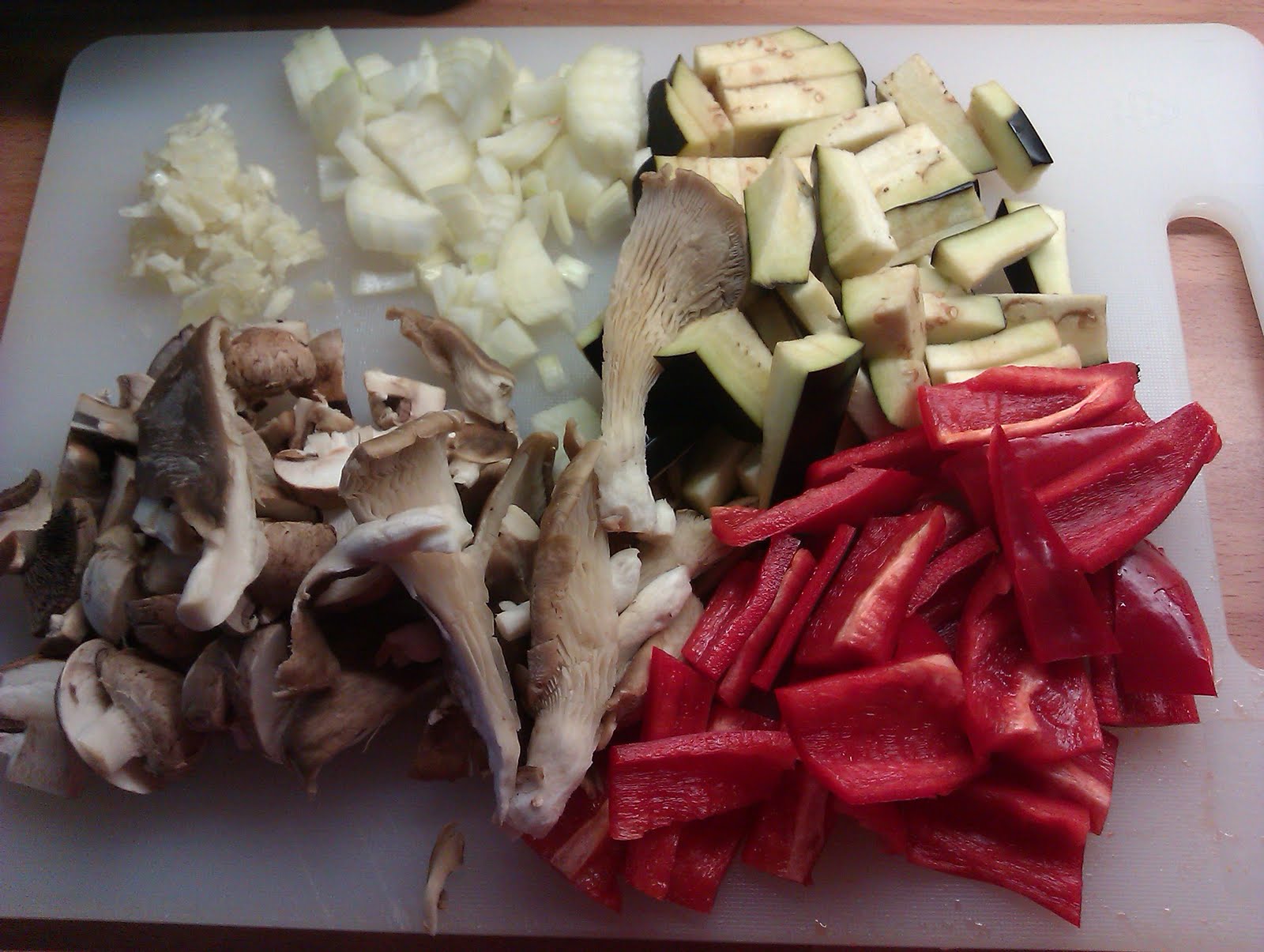
Having been a little kitchen crazy recently, I fancied a little break tonight. I made a classic throw-together dinner - few of the ingredients are essential, it can be made with a lot of vegetables that might be in the fridge or freezer and pretty much anything else you have lying around.I still had the farfalle that I made a while ago, using leftover pasta from the cannelloni, along with some aubergine, leftover from the kibbi. There was also a red pepper, some mushrooms, fresh parsley and oregano, a heel of parmesan, plus I've always got onions and garlic.
I also had a little bit of cream and lemons left from making the lemon tart. With a small pack of thick-cut bacon and some peas from the freezer, this all added up to the makings of a lovely, easy supper.
After chopping the veg, I put the pasta into a pan of boiling, salted water. Then fried the bacon up with the garlic and onions. When pretty much cooked I added in the aubergine, a sprinkling of dried chilli and a few spoonfuls of the pasta water to stop everything sticking. After a few minutes more, the pepper and mushrooms. When everything was cooked, I added the lemon juice and stirred it through before adding the cream, herbs, grated parmesan, salt and pepper.
![]() | ![]() | ![]() |
I drained and sitrred the pasta into the sauce, along with another couple of spoons of the water.
This kind of meal can be made with stock or tomatoes if you don't have any cream and any of the vegetables could be substituted for something else; the base is just pasta, garlic and onion.
The real point of it is that you can make a filling, interesting pasta sauce out of whatever you have in the kitchen; it'll taste better and be better for you than any pre-made jar and takes zero time to do. I think I spent longer writing the four paragraphs in this post than I did cooking it...
The components of Random Pasta Sauce:
1. Liquid: cream, stock, water, tinned tomatoes, passata etc.
2. Alliums: garlic and onions of any kind, even leeks and spring onions can work.
3. Umami: cheese, cured meat, fish, shellfish, tomatoes and mushrooms all give a robust savoury flavour.
4. Vitamins: I usually aim to include at least three different types of veg, to ensure variety in the look, taste and texture.
5. Acidity: lemon juice, vinegar, wine, vodka etc.
6. Seasoning: salt, pepper, fresh or dried herbs, chillies etc.
Labels:
bacon,
cream,
farfalle,
homemade pasta,
mushrooms,
peas,
peppers,
vegetarian
Wednesday, 1 June 2011
Courgette Cannelloni
We had some friends coming over and I wanted to cook something tasty for them. I hadn't ordered enough lamb to make that go around, so I ransacked the fridge and found a couple of courgettes and a pot of ricotta - that'll do! I already had flour, eggs, a tin of tomatoes and so on, which made cannelloni an obvious choice.First, the pasta. Quick and easy, using the method that Chef Steve Watts showed me. Stick 500g of "00" flour into the food processor, add 3 eggs and two yolks and whizz until it looks breadcrumby. It's perfect, squidge it into patties in your hands, flatten them a bit and wrap in clingfilm to rest in the fridge.
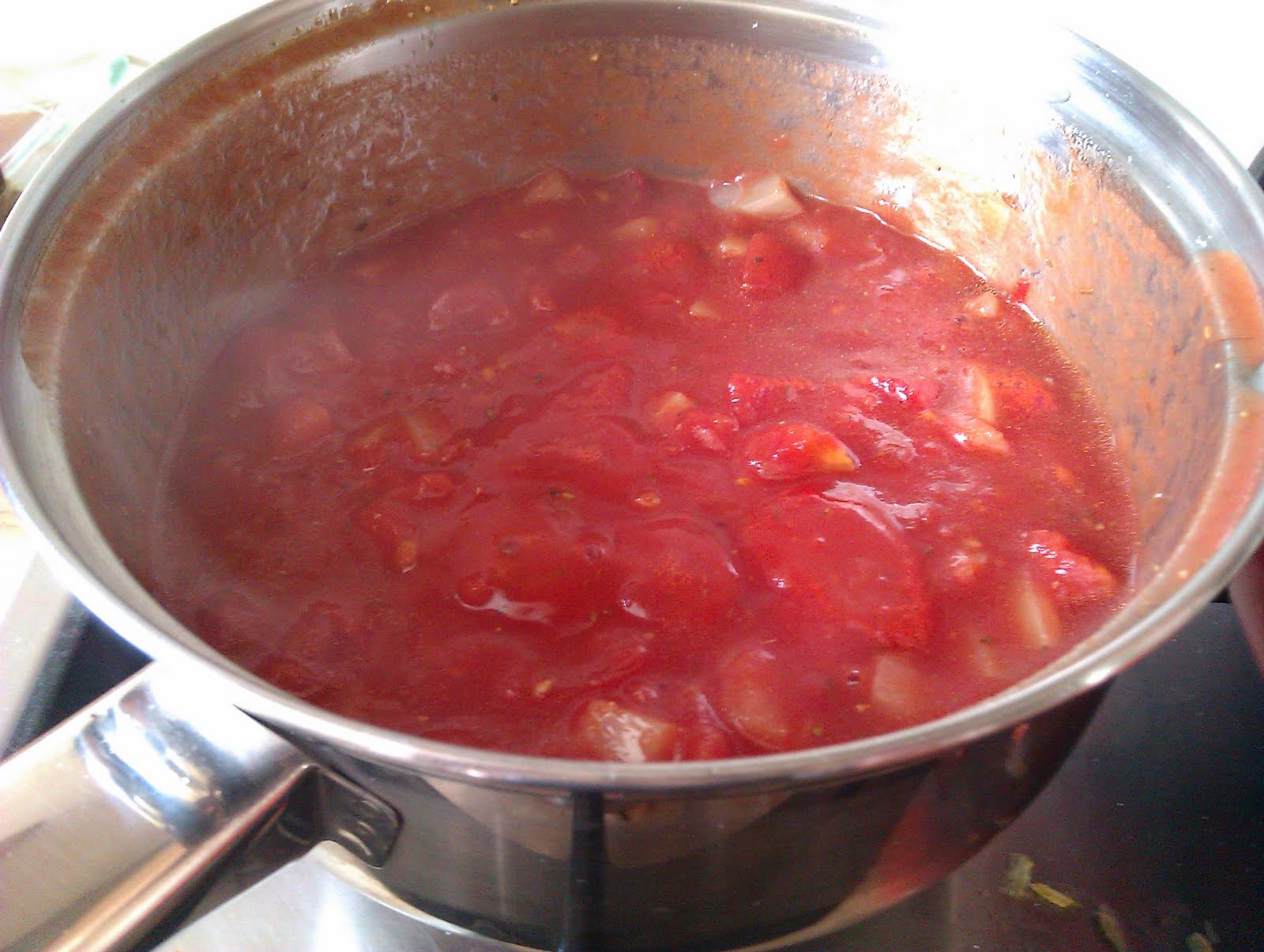
Then, tomato sauce, which couldn't be simpler. Fry up some smashed garlic, a small amount of chilli, some celery and some onions until softening. Add a tin of tomatoes, some tomato puree and a liberal scattering of oregano. Bring up to a simmer, add a squeeze of lemon and a shot of vodka and let bubble away for a while. Then season with salt, pepper and a little sugar. Done.
![]() | ![]() |
|
For the filling, I had two courgettes in the fridge and one in the garden, so to bulk the dish out I also used a few handfuls of frozen peas; having tasted the result I'm always going to include peas now. Grated the courgettes (well, got the other half to do it), then fried up the garlic and chilli with the celery and onion until softened, then added the peas to cook through.
Once cooked I put them in the food processor, because otherwise the texture of the canelloni would be a bit weird. Then back on the stove and the grated courgettes added, cooked gently for a while to evaporate most of the moisture. I added salt and lots of pepper, then left it to cool.
![]() | ![]() | ![]() |
When cool, I added the ricotta and put in the fridge while I rolled out the pasta sheets.
I'm not going to lie - this dough is harder to work with than my previous wetter style dough, but the results are great and it is worth the effort. I've found that giving each peice of dough a good flattening with a rolling pin first is helpful, as is splitting the dough up into small manageable peices. Then pass it through the pasta machine on the widest setting. If bits fall off, or it goes a funny shape, press them back together and pass it through again. This isn't masses of fun but it does come together eventually!
| ![]() |
|
Then you can pass it through the smaller settings until you have a long strip of pasta. Lay this on a teatowel, cover and do it again until you've run out of pasta.
For the cannelloni, I lay out each strip and put a line of filling end to end. I brushed water along the lowermost edge and rolled the pasta over to make a tube. Repeat until out of filling. I used the left over pasta to make farfalle for later in the week; it stores nicely laid out with a coating of semolina flour.
![]() | ![]() | ![]() |
Coat the cannelloni with tomato sauce, dot the ricotta over the top and sprinkle with grated parmesan. Bake for about half an hour at 180 degrees, and enjoy - it really is a lovely meal.
Tuesday, 10 May 2011
Pastalicious
Being of partly Italian descent I felt quite ashamed when I hit my late twenties and realised I still didn't know how to make fresh pasta. Then, one birthday, I was given a pasta machine...
Delicious dinners plus absolute disasters ensued. That pasta machine was the target of so much abuse before it finally gave up the ghost, with a last ditch attempt to poison us by shedding metal from its gears into the dough. Yum.
I didn't make pasta from scratch again for a couple of years, it just seemed like too much aggro when perfectly delicious dried pasta was available in the shops. The texture isn't quite the same but dried pasta is wonderful enough and doesn't cause stress spikes in your blood pressure.
I did eventually get another pasta machine though and, with some trepidation, set out to make my own once again.
| Pasta is honestly easy to make and absolutely delicious |
It's a funny thing, a bit like the gardening, somehow everything just clicked into place. Now whether that's just because I had a bit more general cooking experience or because the new pasta machine isn't harbouring a grudge, or maybe just that I'm less stressed out and happier these days, I've no idea. All I know, is that I do now understand how easy pasta is to make and can't really recall what it was that made it so stressful before.
The ratios I use are about 100g flour to 1 egg, with the average batch being 400g/4 for 2 people to have both dinner and a lunchbox the following day. So, that's 100g/1 per portion or, if you're feeling lazy, just use a teacup to scoop out the flour, you can always add a little water if the mixture turns out a bit dry. Strong bread flour seems to work fine for me but the extra finely ground tipo 00 is the easiest to knead.
After it's chilled out for a while, pull it out of the fridge and tear off half or a quarter of the dough (depending on how much you made) and flatten it out on the worksurface with your hands.
Put the pasta machine onto it's widest setting, mine runs from stages 1-7, that probably refers to a measurement of some sort but I've no idea what.
Give the pasta a thin coat of flour and then run it through the machine, put the setting up one and run the pasta through it again, continually flouring at any sign of stickiness. By about stage 4 or 5, cut the strip of pasta in half and keep going. I never take it to stage 7 (the thinnest setting), as I think stage 6 works best. Stage 7 would be good for pressing herbs or flowers between sheets of pasta, I think I saw Jamie Oliver demo that.
Depending on what you want to make, once a strip of pasta is ready you can either run it through the spaghetti or tagliatelli rollers, cut it into papardalle with a knife, or look at making shapes from it - fusilli, farfalle etc.
The most common shape I make is tagliatelli, although today I made lazy pasta - strips of pasta that look like they've been cut by a drunk six year old.
No matter what you make, the one thing I've learned the hard way is that you need to keep pasta floured and don't leave it sitting in a pile for too long or it'll stick together and be a disaster. Make sure all the peices have a thin, floury coat and every now and again toss them about to get air in between them and stop any sticky bits from getting settled.
Whatever you do, don't lay peices of pasta on top of each other to store them. They need to be stashed individually with air all around them. I once stayed up until 2am making tortellini only to come down in the morning and find a dish of squish, completely unrescuable. I haven't made tortellini since as it was an utterly depressing sight, so ignore the above advice at your peril!
Repeat until all the dough is used up and ready to cook. Get a huge pan of water on the boil: whichever saucepan you were thinking of using, use one at least a size larger than that. I used to think this was overkill and unnecessary, it isn't though. Without lots of space for the pasta to swirl around in, it does tend to get stuck together and you can end up with clumps of uncooked bits. Don't bother adding oil to the water, greasy pasta is horrible, just use a big enough pan.
Add a huge pinch of salt to the water, it makes a big difference to how great the pasta tastes.
We're talking just a few minutes before it's ready, it'll float to the top when it is but always do the taste test anyway or you won't get it just the way you like it.
Drain it in a colander but keep a bit of the water left over in the pan too. Add your sauce, mix it up and serve.
The Sauce
Today I made a ricotta and green things sauce. I sauteed up some garlic, onions and celery, added frozen spinach and peas, then some sliced courgettes and finally a pot of ricotta. Salt, pepper, chopped mint, the juice of half a lemon and it's ready to go (don't forget the cup of water left in with the pasta, this provides a bit of liquid for the sauce and the starch, so I'm told, helps it adhere to the pasta).
One final thing, grate a little parmesan over the top. Fabulous!
Labels:
courgettes,
homemade pasta,
mint,
pasta,
peas,
ricotta,
spinach,
vegetarian
Subscribe to:
Posts (Atom)